
COPD Hospice Criteria
Chronic obstructive pulmonary disease can change slowly for years, which is one reason families often feel unsure about when standard medical treatment is no longer enough and when comfort-focused care should enter the conversation. A loved one may still have good days, still recognize everyone, and still want to be home, yet the overall pattern may show more breathlessness, more fatigue, and less ability to recover after flare-ups. That gray area is where many caregivers start asking about COPD hospice criteria, because they want to make wise decisions before another crisis forces one. Anvoi Hospice helps families understand that hospice is not about giving up, it is about shifting the goal of care toward comfort, stability, dignity, and support at home.

For people living with advanced lung disease, hospice can bring relief that reaches far beyond medication management alone. It can help reduce the panic that often comes with severe shortness of breath, guide families through oxygen use and symptom changes, and provide a plan for difficult days that feel unpredictable. Just as important, hospice gives caregivers a clearer picture of what to expect, which often replaces fear with a sense of direction. When families understand the medical criteria in plain language, they are better prepared to recognize when hospice may truly help.
What Does COPD Hospice Criteria Mean?
COPD hospice criteria refers to the clinical signs doctors use to decide whether a person with advanced lung disease may be eligible for hospice care. In general, hospice is considered when a physician believes the patient may have a life expectancy of six months or less if the illness follows its expected course. With COPD, that prediction is not always simple, because decline can happen in steps rather than in one straight line. A person may look stable for a short period, then have a major exacerbation that leaves them weaker than before.
That is why eligibility is usually based on the whole picture rather than one test result by itself. Doctors often look at worsening breathing symptoms, repeated hospital visits, lower oxygen levels, rising carbon dioxide levels, poor functional status, and signs that the body is becoming more fragile over time. Families sometimes assume hospice only applies in the final days of life, but Medicare guidelines are designed to allow support earlier than that when serious decline is clearly present. In many cases, starting hospice sooner gives patients more comfort and gives caregivers more help while it can still make a meaningful difference.
Medicare Looks at the Overall Pattern
Medicare guidelines for hospice do not require families to solve a medical puzzle on their own, and they do not expect one perfect checklist item to make the decision. Instead, the focus is usually on whether the person has advanced disease and whether the condition is continuing to worsen despite appropriate treatment. For COPD, that often means breathing problems are severe, daily activity is very limited, and complications keep becoming more common. The disease may be reaching a point where curative treatment is no longer reversing the decline in a meaningful way.
In plain language, Medicare is looking for evidence that the illness is serious enough, and progressive enough, that comfort-focused care is appropriate. A patient may qualify if there is disabling shortness of breath at rest, poor response to bronchodilators, frequent infections, repeated emergency visits, unintentional weight loss, or increasing dependence on others for daily tasks. Low oxygen levels in the blood, high carbon dioxide levels, right-sided heart strain, and declining strength can also support eligibility. Even when every item is not present, the combination of medical decline and practical decline may still point strongly toward hospice.

Severe Shortness of Breath Is One of the Biggest Signs
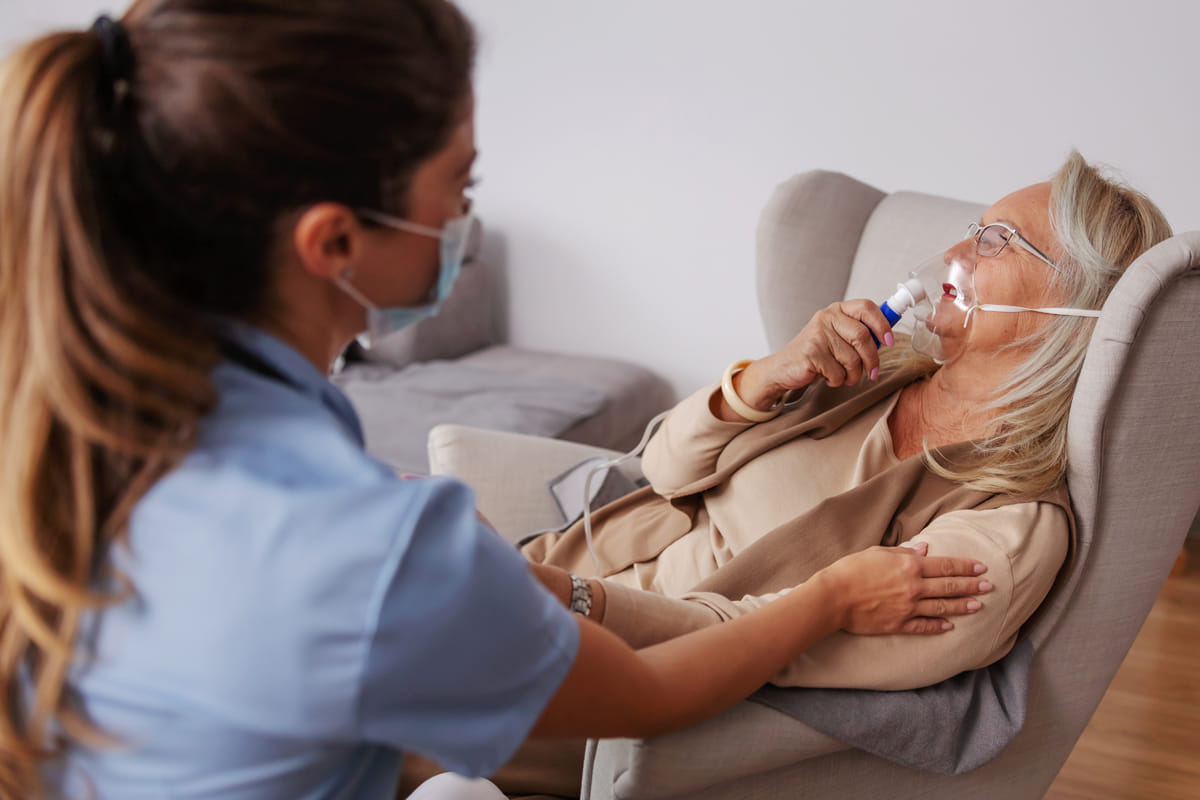
One of the clearest signs of advanced COPD is breathlessness that affects nearly every part of daily life. A person may become short of breath while speaking, eating, using the bathroom, or simply moving from one chair to another. Recovery after minor activity can take much longer than it used to, which leaves the patient exhausted and frustrated. When breathing feels difficult even at rest, families are often no longer dealing with ordinary symptom control, they are dealing with a major quality-of-life issue.
This kind of severe dyspnea matters in hospice discussions because it shows how much the disease is limiting the patient, even when treatment is still being used. Many patients with advanced COPD continue inhalers, oxygen, nebulizers, and other supportive measures, yet they still live with a constant sense of air hunger. That ongoing distress can lead to fear, poor sleep, loss of appetite, and social withdrawal, all of which make the overall burden of illness heavier. Hospice care is designed to address that burden directly by focusing on comfort, calm breathing strategies, and symptom relief that fits the patient’s goals.
Frequent Exacerbations Often Signal Decline
Another important part of COPD hospice criteria is the pattern of flare-ups over time. If a loved one has repeated exacerbations that lead to emergency room visits, hospitalizations, steroid use, antibiotics, or sudden drops in function, that pattern may indicate the disease is entering a more advanced stage. Each exacerbation can take a little more out of the body, even when the patient survives and returns home. Families often notice that recovery is slower after each episode, and that the patient never quite gets back to the previous baseline.
These repeated crises are not only physically exhausting, they are emotionally draining for everyone involved. The patient may begin to live in fear of the next breathing emergency, while caregivers start organizing life around rescue medications, oxygen changes, and urgent calls for help. Over time, frequent flare-ups can become a sign that the illness is progressing despite active management. That is often the moment when a hospice evaluation becomes less about prognosis in the abstract and more about meeting the reality of daily life.
Functional Decline Tells an Important Story
COPD hospice eligibility is not based only on lungs, oxygen, or lab values, because the effect of the disease on daily function matters just as much. A person who once dressed independently may now need help bathing, walking, toileting, or getting out of bed. Preparing meals, managing medications, and moving through the home may become tiring or unsafe. When routine tasks become overwhelming because breathing takes so much effort, the illness is affecting the person at a deeper level.
Functional decline is one of the practical signs families should never ignore, because it often shows up clearly at home before anyone uses formal medical language for it. Caregivers may notice that their loved one spends most of the day in a chair, avoids talking because it triggers coughing or shortness of breath, or has stopped leaving the house entirely. These changes can develop gradually, which makes them easy to normalize until the loss of independence becomes severe. Hospice teams look closely at this kind of decline because it reflects how much the disease is shaping real life, not just the chart.
Weight Loss, Fatigue, and Weakness Matter Too
Advanced COPD affects much more than breathing, and that is why hospice criteria often include signs of overall physical decline. Many patients lose weight because eating becomes tiring, appetite drops, and the body burns extra energy just trying to breathe. Muscle loss can follow, which makes walking, standing, and coughing effectively even harder. That cycle of weight loss and weakness can deepen the patient’s frailty and make recovery from illness less likely.
Fatigue in advanced COPD is also different from ordinary tiredness after a busy day. It can feel constant, heavy, and hard to relieve, even with rest, because the body is working all the time to maintain breathing. A patient may sleep more, speak less, and stop participating in favorite routines simply because there is not enough energy left. When these changes are happening alongside worsening respiratory symptoms, they strengthen the case that hospice may be appropriate. Anvoi Hospice helps families see that these signs are medically significant, not just part of normal aging.
Oxygen Levels and Other Clinical Findings
Medical teams may also look at objective findings that show serious lung impairment. Low oxygen levels, especially when they persist even with supplemental oxygen, can support hospice eligibility for COPD. High carbon dioxide levels in the blood may also point to advanced disease, because they can reflect poor ventilation and increased respiratory failure risk. In some patients, doctors may see signs of cor pulmonale, which is right-sided heart strain caused by chronic lung disease.
These findings are useful, but they are not the whole decision by themselves. A family should not assume that a loved one cannot qualify unless they have a specific number or a recent blood gas test in hand. Hospice evaluations take clinical evidence seriously, yet they also consider symptoms, decline, hospital use, nutritional status, and the patient’s overall trajectory. When the big picture shows advanced illness and growing need, hospice may still be appropriate even if not every textbook marker is present.
Do Families Need to Wait Until Treatment Stops?
Many people delay hospice because they think it means all treatment must end immediately, and that misunderstanding causes unnecessary suffering. For patients with COPD, hospice usually focuses on comfort-oriented treatment, which means many helpful supports may continue if they are easing symptoms. Oxygen therapy, inhalers, nebulizer treatments, and medications for anxiety or shortness of breath may still be part of the plan. The difference is that the purpose of care shifts from trying to reverse the disease to making daily life more comfortable and manageable.
This matters because families often believe they must choose between doing nothing and chasing every hospitalization. Hospice offers another path, one that emphasizes breathing comfort, symptom monitoring, education, and support in the home setting. A patient does not have to wait until they are completely bedridden or unable to communicate before hospice becomes valuable. In fact, many families later say they wish they had started the conversation sooner, when their loved one could benefit from more time with the team.
When Should Families Consider Hospice for COPD?
Families should consider hospice when the question keeps coming up, because repeated uncertainty is often a sign that the need is already growing. If your loved one has severe shortness of breath, repeated exacerbations, increasing oxygen needs, frequent infections, declining strength, or growing dependence with daily activities, it may be time to ask for an evaluation. The same is true if hospital visits have become common, recovery takes longer, or the patient seems to be living with more distress than comfort. Hospice is worth discussing when treatment is still happening, but life is becoming narrower, harder, and more crisis-driven.
There is also an emotional side to timing that families should not overlook. Caregivers often reach a point where they are constantly watching for the next emergency, sleeping lightly, and feeling unsure about what to do when symptoms change. That level of strain is a sign that more support may be needed, both for the patient and for the people providing care every day. Hospice can step in with guidance, nursing support, equipment coordination, and practical teaching that lowers the sense of isolation. Asking early does not commit anyone to admission on the spot, but it does open the door to clarity.
How Hospice Helps Patients Living With Advanced Lung Disease
Hospice support for COPD is centered on comfort, dignity, and helping the patient stay as stable as possible in familiar surroundings. The team may help manage breathlessness, coughing, anxiety, fatigue, pain, and restlessness, all of which can become serious burdens in advanced lung disease. Nurses can monitor changes, adjust the care plan, and teach families what is normal, what is urgent, and how to respond during a difficult breathing episode. That kind of preparation often reduces panic, because families no longer feel they are facing every symptom alone.
Hospice also helps daily life feel more livable, which is easy to underestimate until support is actually in place. Equipment such as oxygen supplies, hospital beds, or other comfort-related items may be coordinated when needed, and medications related to symptom control may be included in the plan of care. Social workers, chaplains, aides, and other team members can address emotional strain, practical needs, and personal goals that matter to the patient. Instead of structuring every week around medical disruption, hospice tries to create a steadier rhythm centered on comfort and meaningful time at home.
Caregiver Support Is Part of Good COPD Hospice Care
When one person in the home has advanced COPD, the whole household often feels the impact. Caregivers may be managing medications, tracking oxygen, assisting with bathing, helping with transfers, cleaning equipment, handling appointments, and trying to stay calm during frightening symptom changes. That work is physically demanding, but it is also emotionally heavy, especially when no one is sure what the next month will look like. Hospice recognizes that caring well for the patient includes supporting the caregiver in practical ways.
Anvoi Hospice helps families understand what changes to expect, who to call when symptoms worsen, and how to make the home environment more comfortable and less stressful. That guidance can reduce the pressure to make every decision alone, which is one of the hardest parts of caring for someone with advanced illness. Families often need reassurance that they are not missing something, that they are not overreacting, and that comfort can still be improved even when the disease itself cannot be cured. Good hospice care answers those needs with education, presence, and a plan.
A Clearer Path Forward With Anvoi Hospice
COPD hospice criteria can sound technical at first, but the real question is often much simpler: is your loved one living with advanced lung disease that is becoming harder to manage, harder to recover from, and harder to carry at home without added support? If breathing is more difficult, independence is fading, crises are becoming more common, and comfort matters more than aggressive intervention, hospice may be the right next step. Families do not need to wait for perfect certainty before asking for help. They need honest information, compassionate guidance, and a team that understands what advanced COPD looks like in real life.
Anvoi Hospice is here to help families make sense of that moment with clarity and compassion. Through education, symptom support, and home-based hospice care, the team helps patients with advanced COPD experience greater comfort, less fear, and more dignity in the place they know best. Caregivers also gain support that makes the road ahead feel less lonely and more manageable. When the signs are pointing toward hospice, reaching out can be one of the most caring decisions a family makes.
Our Locations
Areas We Serve



Anvoi has been providing hospice care since 2013 with over 100 years of accumulated experience.